No UX, No Problem? A Qualitative Study into How Product Managers Navigate UX Without UX Support
Eight interviews with John Deere product managers led to a community forum and a monthly PM cohort for teams working without dedicated UX support.
On this page
TL;DR
Eight interviews with John Deere product managers led to a community forum and a monthly PM cohort for teams working without dedicated UX support.
- Problem
- John Deere India runs 250+ internal products, and most have no dedicated UX professional. Product managers absorb the gap.
- My role
- UX Coach and Researcher
- Team
- Product and Customer (P&C), Foundry, John Deere
- Timeline
- 12 weeks, 2023
- Methods
- 8 semi-structured interviews, 45 minutes each, with note-takers.
- Outcome
- A community forum and a monthly PM cohort, plus buddy pairs, Mural templates, and eight workshops.
- Decision it informed
- Stand up a community forum and a monthly cohort for teams working without dedicated UX support.
Overview
John Deere India runs 250+ internal products, and most have no dedicated UX professional. Product Managers absorb the gap. They run their own research, shape their own flows and make calls on judgement.
As UX coach on the Product and Customer (P&C) team, part of Foundry in John Deere's Strategy and Transformation pillar, I interviewed eight Product Managers to refine the PM persona and learn what support would fit the way they already work. The study led to a community forum and a monthly PM cohort.
The Process
The work followed the Double Diamond: open up to understand the problem, narrow to define it, then open and narrow again on what to build.
Discover
Interview guide in six blocks. Eight interviews with note-takers.
Define
Per-participant grid, six need clusters, the Rajesh persona and a reframed problem statement.
Develop
Discussion-led sessions on ways to answer each need: a forum, a cohort, buddies, templates.
Deliver
Community forum, monthly PM cohort, Buddy-Up pairs, Mural templates and eight workshops.
Gathering Insights
I ran eight semi-structured interviews in June and July 2023, each 45 minutes, with one or two note-takers in the room. Participants ranged from ten months to six years in the PM role, with backgrounds in infrastructure, security, engineering, SAP and cloud.
Every session opened with the same script: no right or wrong answers, confidentiality, and consent to record. The guide then moved through six blocks.
Life outside work
Spare time and non-professional goals.
Role
A typical workday, the values they track, where decision data comes from.
Support
Last contact with the P&C team, time management, tools, team motivation.
Growth
Time with their GPM, what success looks like, who they turn to.
Frustrations
Their biggest frustrations, the magic-wand question, a moment they were blocked.
Strategy and community
Product versus org strategy, PM groups, topics for coaching.
What the Interviews Showed
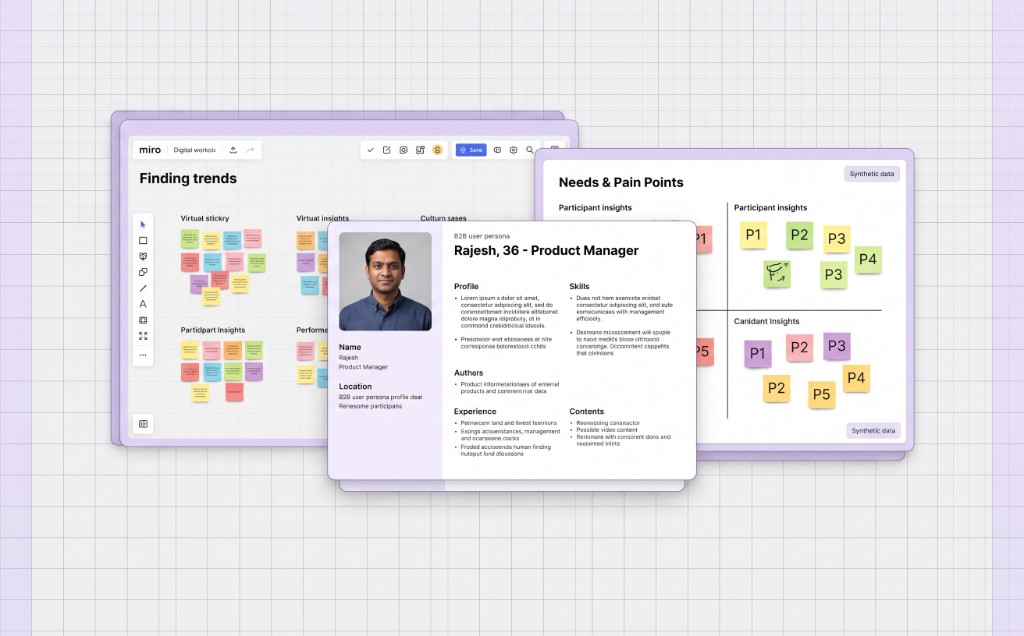
Notes from each session went onto a Mural board, one row per participant, then into clusters of needs and pain points. Isolation came through most strongly: six of eight PMs had no peer community to turn to.
“No active forums for PMs”
“No way to gauge personal growth”
“UX and data analytics person/resource - need”
“No benchmark of best practises”
“Technical side of aspect is weak”
“Struggling to manage time as PM”
“Process side dont know how to utilize P&C services”
Participants who raised each theme. Lines in quotes are notes from the board as written, not verbatim quotes.
Framing the problem
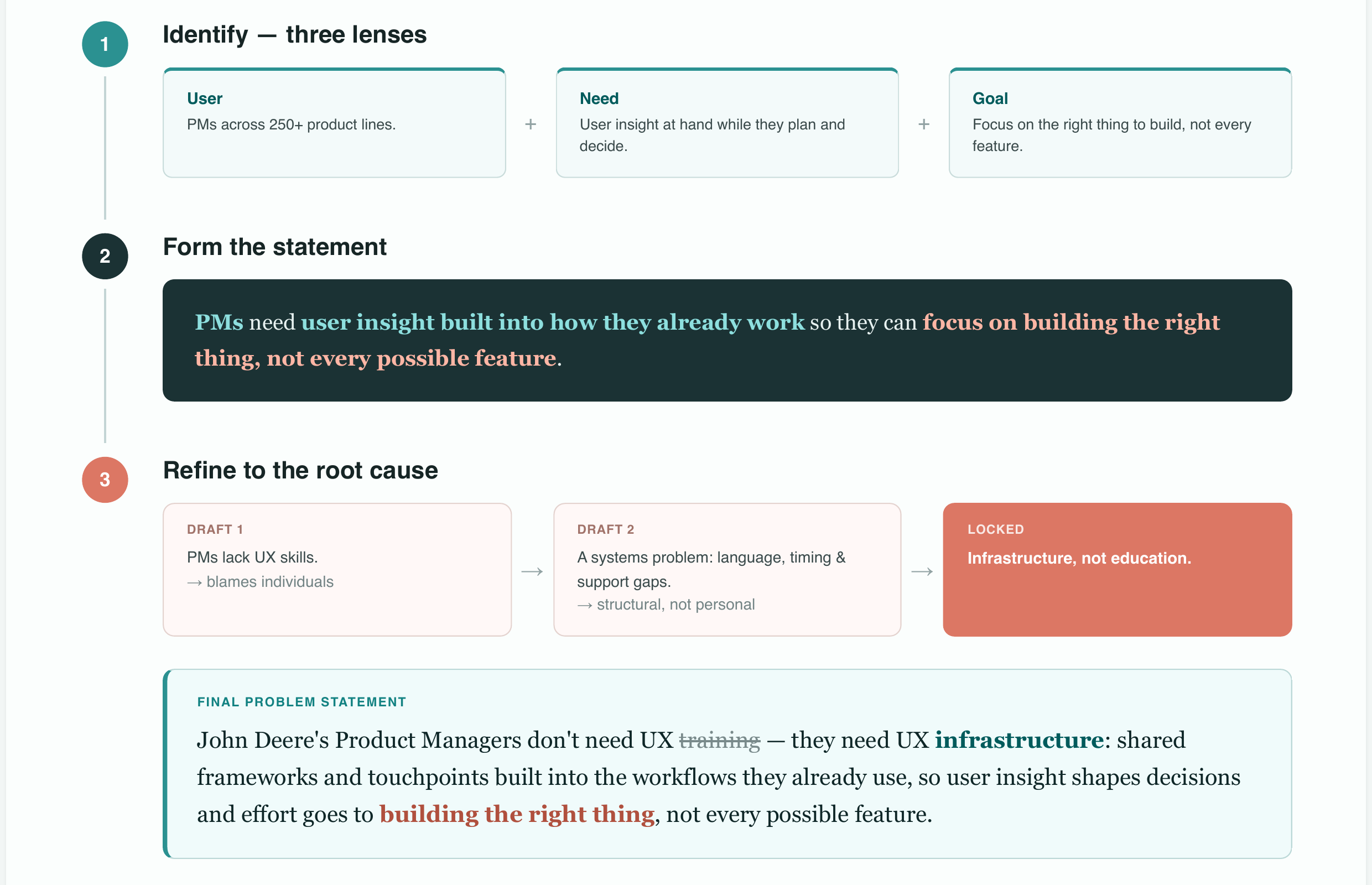
Infrastructure, not education.
PMs did not need more training. They needed a place to ask, people to ask, and practices within reach. Workshops stayed in the plan as the way people reach that infrastructure, not as the answer itself.
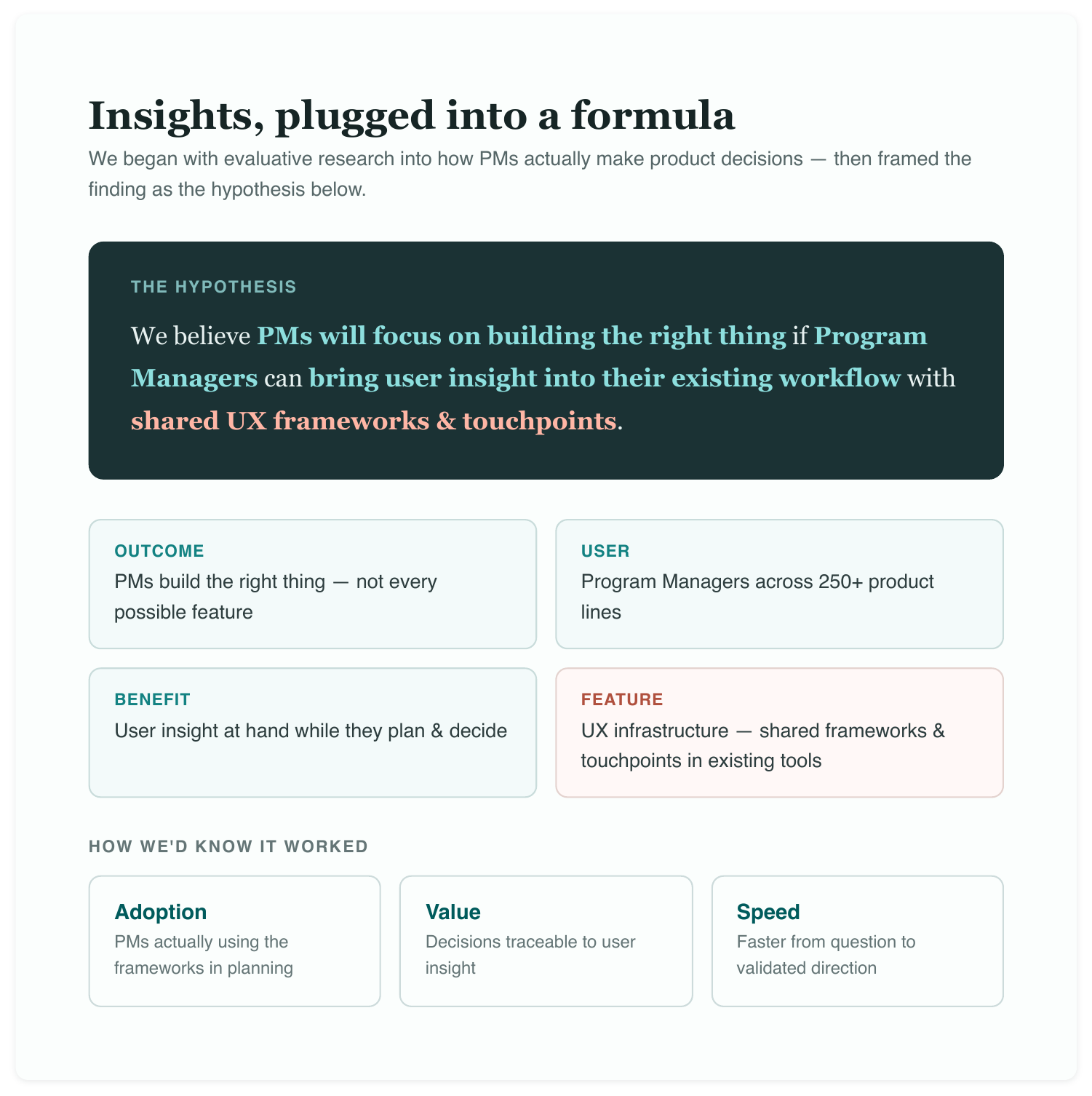
From insight to hypothesis
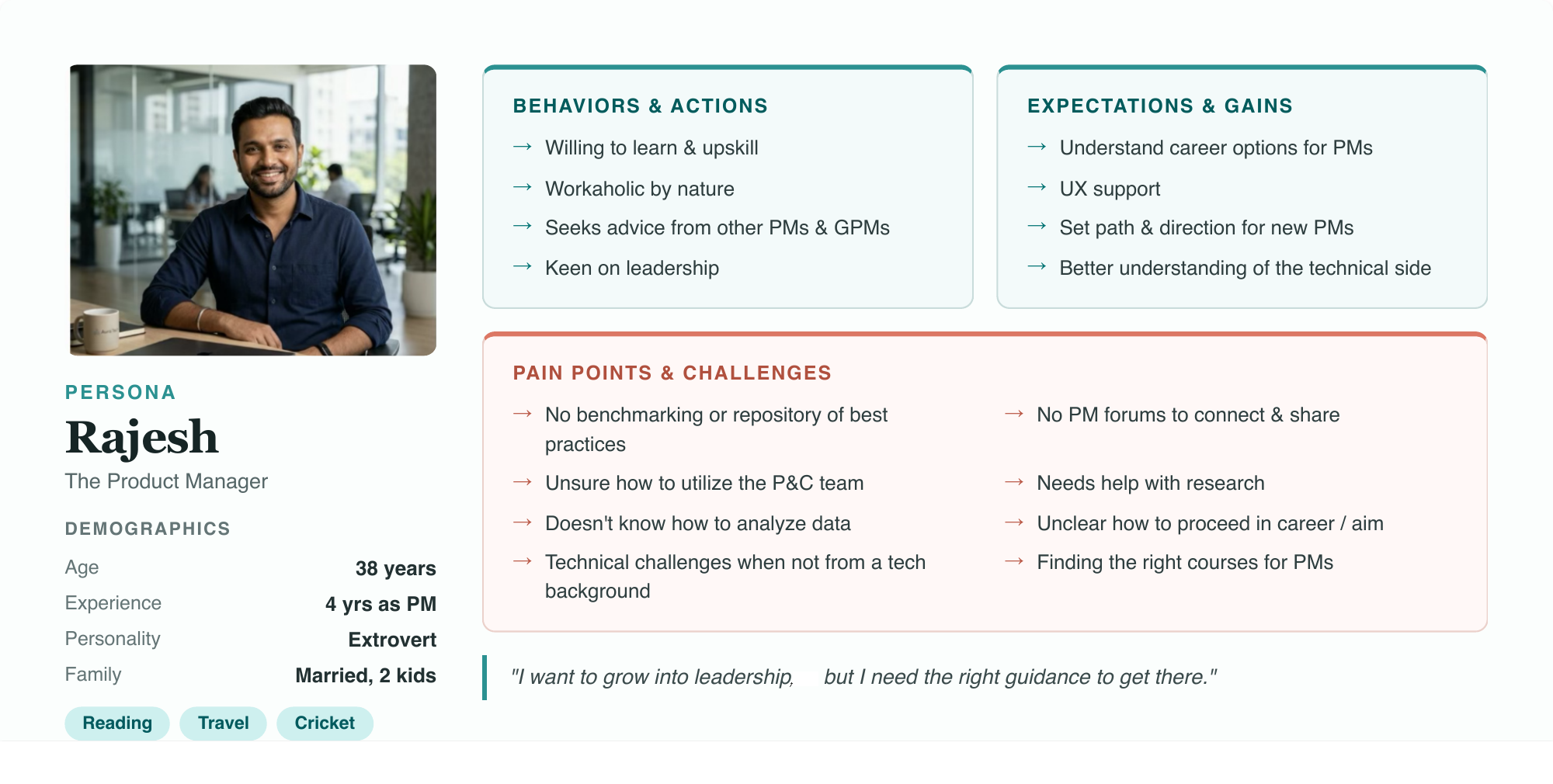
Persona
The clusters became Rajesh, a composite Product Manager built from all eight interviews.
Three profiles behind the persona
One persona hides real differences. The notes point to three kinds of PM, each needing a different way in.
The new PM from the business
Recently moved into the role with no IT background. Plans on own judgement. Needs role clarity and someone to ask.
Buddy-Up firstThe data-hungry veteran
Years in the company. Already digs into data or sketches ideas alone. Needs a UX and analytics partner and a growth path.
A route to UX collaborationThe settled specialist
Deep technical niche, content in the role, few goals set. Needs a reason to engage and to know a community exists.
Forum, light touchWhere a Product Decision Loses User Insight
Following one product decision from start to finish shows where each pain point lands, and where the programme steps in. The six steps are reconstructed from the interview notes.
Left to right: the step, the pain PMs described, and what the programme adds.
Delivery
The most frequent need got the first answer. Each piece gives PMs somewhere to turn that did not exist before.
Community forum
A shared space where PMs ask questions and trade practice, so no one works a problem alone.
Monthly PM cohort
A standing monthly session that gives career growth, and the UX courses PMs asked for, a regular home.
Buddy-Up pairs
Each PM paired with a UX coach or a peer PM, as a guide or simply a thinking partner.
Mural templates
Structured frameworks PMs can run themselves in discovery and brainstorming sessions.
Eight workshops brought PMs to the forum, their buddies and the templates. One finding needed nothing new: the DeereUX site already existed, but few PMs knew it was there, so the programme pointed them to it.
Impact
The forum and the cohort launched. What they changed is reported at four levels, and stated plainly where it was not measured.
Average 12 PMs per monthly cohort
Eight workshops on forum use, Buddy-Up, Mural discovery templates, and UX fundamentals
24 forum members and 38 threads in the first three months
Not measured
Limitations
- Eight participants from one organisation. The patterns may not hold across every product line.
- One analyst clustered the notes. No second coder checked the themes.
- The debrief after each interview was skipped, so early surprises were not captured while fresh.
- Outcomes were not measured against a comparison group.
What This Project Taught Me
Debrief while it is fresh
Five minutes of takeaways after each interview would have made synthesis faster and sharper.
The guide shapes the findings
A guide built to profile the PM surfaced career and community first. The questions decide what you hear.
Plan the measure before launch
Deciding how success would be counted on day one would have turned a launch into evidence.
Next Steps
- Diary study: PMs log real product decisions for two weeks.
- Monthly tracking: cohort attendance and forum activity, month by month.
- Comparison group: PMs outside the programme, measured on the same things.